#HRActofKindness Challenge Two: Reconnect

Welcome to day two and our second challenge. I hope you enjoyed yesterday and I’m looking forward to hearing what you got up to!

Reconnect with a former colleague or connection on Linked In or grab a coffee with a colleague that you’ve not had time for recently.

#HRActofKindness

#HRActofKindness Challenge One: Recognition

Good morning and welcome to challenge one. We are not starting small; today’s challenge is exactly that, a challenge!

Don’t forget to let me know how you are getting on and spread the word, let’s show the world what HR can do! Have a fantastic day.

Recognise when a colleague is having a bad day or if they are struggling;

find out what you can do to help and support them

#HRActofKindness


What is HR’s role when a company goes into administration?


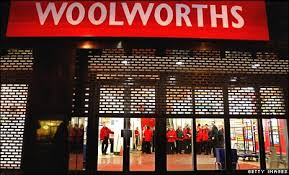
Woolies

In 2012 I gave a short interview to People Management to provide a perspective of HR when a company sadly goes into administration after the collapse of HMV.

Following the news that BHS has gone into administration; putting 11,000 jobs at risk, I thought it would be appropriate to share my experiences from when I worked at Entertainment UK, part of the Woolworths group which collapsed in 2008.

When the announcement was made on 26th November 2008, it’ll be a moment in my early career that I will never forget and I quickly learned that business can be unbelievably harsh therefore I must toughen up to support the needs of the employees and secondly, I have never seen such a variation of reactions in one room before, it’ll be an image that will stay with me. Poor business decisions alongside difficult trading and an ever increasing pension deficit all contributed to Woolworths demise and now it seems history is repeating itself with the employees suffering the most.

So what can HR do when a company has hit the buffers? Unexpectedly, employee reactions are amazingly mixed; some are not surprised, others are shocked, some are relieved, others want to do everything they can to save the company, but the majority are distressed and concerned for the future.

When you work in a business where it has a substantial heritage, you often have an incredibly loyal workforce which has a community feel to it so it is vital that HR provide support as much as possible and handles the situation with great sensitivity. Support each employee as an individual case and listen to their concerns.

HR is almost completely helpless once the administrators arrive on site, yet it is a very busy time for them. Simple requests such as holiday entitlements and resignations have to be run past the administrators first which can take a long time to obtain a response. Most company contracts and assets are frozen which can include employee assistance programmes (unless the full fees are paid for upfront) so HR has to take on the role of handling the situation to the best of their ability and trust me, it is incredibly difficult.

Speaking to the employees is vital, as a HR administrator I went to pick and pack in the warehouse to get orders out just in time for Christmas. Surprisingly it was a jovial time as it looked like Woolworths might actually survive. It was great to see the stock moving again but it had been an incredibly slow two weeks to get to that point and I just couldn’t sit in the office anymore!

We were advised on 12th December 2008 that the iconic doors were closing with final trading taking place on 6th January 2009. From 12th December the HR team had 5000 employees queuing up for advice on their redundancy pay, shares and pensions. I remember going home that evening and feeling completely numb and being able to memorise RP1 forms in my head!

The amount of tearful thank you’s we received as a team in such difficult conditions made us really appreciate that we had the opportunity to work with some wonderful people and that by actively listening and being supportive has impact on employees.

I decided to contact as many recruitment agencies as possible in the hope that we could find suitable employment for as many employees as possible. We held CV workshops, interview skills training (some had been with the company for 40 plus years so this was their primary area of concern) and invited the recruitment agencies in to register candidates. Obviously this shouldn’t be done until further information from the administrators are announced and confirmation of the future of the business is received.

For now BHS continues to trade as normal until a suitable buyer is found or a decision to cease trading is made. As my former colleagues and I often say – there’s life after Woolworths, it’s just hard to imagine life without it.

Stepping Up

Hello!

It’s been a while since I’ve blogged about Steps Ahead so I wanted to give a bit of an update on my progress as SA Ambassador.

I’m taking my role really seriously and want all young people to have the opportunity to experience this programme.

Recently the CIPD released a Steps Ahead Video describing how the programme works as well as the relationship between mentor and mentee. The video is live on You Tube so do check it out in the link above.

Last week whilst I was on annual leave (work never stops for me and I wouldn’t have it any other way!) I visited the Job Centre Plus at Daventry, Northamptonshire to promote Steps Ahead. The team there were very welcoming and were pleased that we could bring the programme to their local community. The team also asked if I was able to host a workshop with the young people to encourage more onto the scheme as at the moment we have more mentors than mentees!

As a result of my involvement with Steps Ahead, I will be a guest speaker at the SA Mentoring summit in London on 7th June which is really exciting and I’m looking forward to speaking with other mentors to find out what experiences they have had with the programme.

There are a lot more things going on with the CIPD over the coming months so I am really looking forward to sharing it with you as soon as I am able to.

I hope you’re all having a fantastic week and as always feel free to share (sharing is caring!) and if you would like me to blog about any particular topics or ask me a question please add a comment and I will happily respond.


Are we at risk of the discriminated becoming the discriminators?

GPG2

It has been a while since I have blogged as it has been an incredibly busy few weeks with employment law updates and various CIPD branch events so I do apologise for the lateness of my post, hopefully it is worth waiting for!

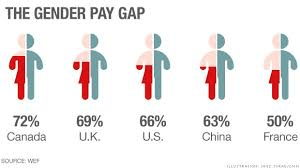
Whilst I have been attending these various events, there has been one trend at each one; money! Changes to the National Living Wage, Apprenticeship Levy, Zero hour contracts and the long awaited outcome of Lock v British Gas all aim to make an impact on employers over the coming months but there has been one topic that has drawn the crowds and has opinions divided; the gender pay gap.

 In the aftermath of International Women’s Day 2016, some say it is a big step for equality (wait for it…), others say it could damage reputations of businesses within industries where the majority employed are men, for example in my industry of manufacturing. Whatever your opinion, these changes are taking effect but businesses will not be required to publicly produce this information until 2018, that is if they choose to do it at all; whilst many may like to see this information, it will not be a legal requirement. Furthermore, given the legal enforcement of the data protection act, there will not be the sufficient evidence available to the public view in order to back up the statistics that employers produce.

GPG

The guidelines state that employers will be required to produce an annual report detailing the levels of pay for it’s male and female employers, they will then need to identify the mean and median numbers in hourly pay and any bonuses. They will also have to disclose the proportion of men to women who receive bonus payments. Whilst this is the main bulk of the report, there are many other elements that need to be included and considered such as sick pay, maternity pay and allowances.

With all of these changes happening, is it too much too soon, too little too late or is it that we are now at risk of highlighting the gaps so much that the discriminated are becoming the discriminators?

So, is this all a load of hot air or just an attempt to appease women with a tick box exercise, or do you think this is beneficial? I’d love to hear your thoughts so do leave me a comment or feel free to ask me any questions, thank you for reading!