What is HR’s role when a company goes into administration?


Woolies

In 2012 I gave a short interview to People Management to provide a perspective of HR when a company sadly goes into administration after the collapse of HMV.

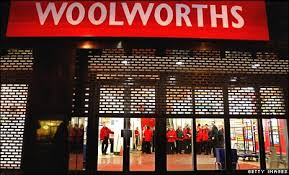
Following the news that BHS has gone into administration; putting 11,000 jobs at risk, I thought it would be appropriate to share my experiences from when I worked at Entertainment UK, part of the Woolworths group which collapsed in 2008.

When the announcement was made on 26th November 2008, it’ll be a moment in my early career that I will never forget and I quickly learned that business can be unbelievably harsh therefore I must toughen up to support the needs of the employees and secondly, I have never seen such a variation of reactions in one room before, it’ll be an image that will stay with me. Poor business decisions alongside difficult trading and an ever increasing pension deficit all contributed to Woolworths demise and now it seems history is repeating itself with the employees suffering the most.

So what can HR do when a company has hit the buffers? Unexpectedly, employee reactions are amazingly mixed; some are not surprised, others are shocked, some are relieved, others want to do everything they can to save the company, but the majority are distressed and concerned for the future.

When you work in a business where it has a substantial heritage, you often have an incredibly loyal workforce which has a community feel to it so it is vital that HR provide support as much as possible and handles the situation with great sensitivity. Support each employee as an individual case and listen to their concerns.

HR is almost completely helpless once the administrators arrive on site, yet it is a very busy time for them. Simple requests such as holiday entitlements and resignations have to be run past the administrators first which can take a long time to obtain a response. Most company contracts and assets are frozen which can include employee assistance programmes (unless the full fees are paid for upfront) so HR has to take on the role of handling the situation to the best of their ability and trust me, it is incredibly difficult.

Speaking to the employees is vital, as a HR administrator I went to pick and pack in the warehouse to get orders out just in time for Christmas. Surprisingly it was a jovial time as it looked like Woolworths might actually survive. It was great to see the stock moving again but it had been an incredibly slow two weeks to get to that point and I just couldn’t sit in the office anymore!

We were advised on 12th December 2008 that the iconic doors were closing with final trading taking place on 6th January 2009. From 12th December the HR team had 5000 employees queuing up for advice on their redundancy pay, shares and pensions. I remember going home that evening and feeling completely numb and being able to memorise RP1 forms in my head!

The amount of tearful thank you’s we received as a team in such difficult conditions made us really appreciate that we had the opportunity to work with some wonderful people and that by actively listening and being supportive has impact on employees.

I decided to contact as many recruitment agencies as possible in the hope that we could find suitable employment for as many employees as possible. We held CV workshops, interview skills training (some had been with the company for 40 plus years so this was their primary area of concern) and invited the recruitment agencies in to register candidates. Obviously this shouldn’t be done until further information from the administrators are announced and confirmation of the future of the business is received.

For now BHS continues to trade as normal until a suitable buyer is found or a decision to cease trading is made. As my former colleagues and I often say – there’s life after Woolworths, it’s just hard to imagine life without it.

Vote for me! 

If my blog posts inspire you or if you simply enjoy reading them I would be very grateful if you could vote for my in this years People Management Power list! It won’t take very long and it’d be a dream come true to feature!

To vote please click this link http://www.surveygizmo.com/s3/2708998/People-Management-Power-List-nominations

Thank you for your amazing support and I simply couldn’t do all my hard work without you all behind me so a huge thank you!

Employee well-being, how important is it?

well being

In a word; very!!

I have wanted to blog on this topic for a while now but because it is so broad, it is difficult to sum up in one post so I may end up doing some additional snippets afterwards! We all know that a healthy workforce is a productive one but how can employers lead the way to make effective changes so that well-being becomes part of its company values?

These days well-being is much more than just getting a gym membership in your benefits package, whilst that is an incentive for some employees, it really is not a case of one size fits all anymore! You may have seen that recently there has been heightened publicity upon employers to do much more to implement well-being strategies within their businesses. In my opinion, the key thing is to create a culture of well-being and integrate it as part of the company values.

Employers need to equip managers with the correct knowledge, support and tools in order to re-educate employees so they can take accountability of their own well-being. For instance I actively encourage my team to take a 20 minute walk at lunch time, it sounds really simple but by doing such an activity has increased our productivity, releases any office pressures and enables us to bond as a team.

Lucy Wyndham-Read, founder of LWR Fitness emphasises the benefits of taking just 20 minutes to walk every day “lunch time is the best time to invest in your health and by heading out of the office and walking for 10 minutes, turning around and walking back means that you have clocked up 20 minutes of exercise which can burn off around 180 calories. It tones your body, improves your heart health and gives you a super charge of energy for the afternoon, plus you still have 40 minutes left to enjoy your lunch”.

Health and well-being doesn’t just relate to physical health, mental health is also one of HR’s biggest challenges. With a significant increase in absenteeism and work related stress on the rise, what is the best way forward? In short I believe every business is different, so when designing a well-being incentive it really must be fit for purpose by being tailor made for that organisation. Flexible working practices may suit families or those who study outside of work as it allows a work life balance, it is a favourable benefit which is easy to implement but is generally overlooked. Flexibility is in high demand (yes the 9-5 shift is now almost non-existent!) so it is something employers need to be open minded to, some previous companies I have worked in were very sceptical at first but they introduced the idea slowly by opening up their vacancies to parental hours and as a result, it helped the existing employees by allowing them to be more flexible when previously it was more rigid shift patterns with no flexibility. The department became more productive and it was a much happier environment, the business also saw a benefit by increased customer service levels which increased their profit as it strengthened their client relationships.

The changes don’t have to be big, they just need to suit the organisation, and why not engage with the employees to find out what they require within their lives to enjoy their time at work more? You never know, the answer may surprise you! One benefit that really makes an impact is the use of an Employee Assistance Programme. They are relatively inexpensive to businesses and are able to provide impartial services to employees in complete confidence so in all it’s a useful resource to have

There are multiple benefits that such measures will bring to employers when the right well-being package is introduced such as reduced absenteeism. Mental ill health in the UK alone costs over £27 billion a year to business in absence levels. This only highlights the importance for employers to take action and instil wellbeing into their business culture and it should be treated as a priority.

The CIPD created a policy report in January highlighting the key issues that businesses need to tackle in order to progress their workforce into well-being cultures. Inside the report, there is a model which provides the five domains of well-being; health, work, values/principles, collective/social and personal growth. The policy is well worth a read so do and can be found here: http://www.cipd.co.uk/publicpolicy/policy-reports/health-well-being-agenda.aspx for students studying, this may be useful to you!

Whilst HR should take the first steps on implementing well-being initiatives, it is vital to ensure that line managers at all levels of the business are involved to progress and drive the change, without their input it makes the challenge even greater. They are the people who are able to influence the employees by making it a part of their day to day duties as they bring the policies and processes to life.

I hope you have enjoyed this blog post, a huge thanks to Lucy Wyndham-Read (www.lwrfitness.com) for her contribution and as always if you have any suggestions for future posts, comments or questions feel free to get in touch!